Driving yourself through the Kruger is one of the great freedoms of a South African holiday: your own pace, your own stops and as long as you like at a sighting. It also comes with rules that are strictly enforced. This guide covers what SANParks requires, how booking and fees work, a few well-known roads in the south, and when a guided drive is the better choice.
Can you self-drive in the Kruger?
Yes. SANParks says many of its visitors drive themselves, and that many international guests fly to an airport near the park and hire a car there. You can hire at Kruger Mpumalanga International Airport (KMIA), at Hoedspruit and Phalaborwa airports and at Skukuza camp itself. The tourist roads are either tarred or good gravel, so an ordinary car is fine.
There are a few limits on vehicles. Motorcycles aren’t allowed, caravans, trailers and buses must stay on tar, and not every road is open to caravans. Open vehicles are only allowed with a permit and a canopy that hides the shape of the people inside.
The SANParks rules for self-drivers
SANParks asks you to read the green gate permit you receive on entry, and breaking the rules can mean a fine under the Protected Areas Act. The ones that matter most on the road are these.
- Stay in your car. You may only get out in designated areas such as camps and picnic sites. No part of your body may stick out of a window or sunroof, and doors stay closed.
- Keep to the speed limits. 50 km/h on tar, 40 km/h on gravel and 20 km/h in camps.
- Stay on the roads. Off-road driving is forbidden, as is any road with a no-entry sign.
- Respect gate times. You must be inside a camp or out of the park before closing. Late arrivals at entrance gates are turned away.
- Don’t feed or disturb animals. SANParks treats this as a serious offence.
- Keep it quiet. Phones may only be used in camps, at gates and in emergencies, and a noise restriction applies between 21:30 and 06:00. Drones are banned.
Two practical points: SANParks’ Vuswa roadside assistance number is 0800 030 666, and the Kruger is a malaria area, so speak to your doctor before you travel.
Gate times for self-drivers
Entrance gates open at 05:30 from October to March and at 06:00 from April to September. All gates close at 18:30 from November to February, at 18:00 in March, April, August, September and October, and at 17:30 from May to July. If you sleep inside the park, camp gates open at 04:30 in January, November and December.
SANParks’ travel times between camps and gates are minimums at the legal speed with no stops. Skukuza to Paul Kruger Gate is 20 minutes, Lower Sabie to Crocodile Bridge an hour and Skukuza to Malelane 1 hour 45. Build in plenty of slack: SANParks recommends averaging about 30 km/h on tourist roads, every sighting slows you further, and arriving late at a gate is not an option.
Booking and conservation fees
Every visitor pays a conservation fee per person per day. From 1 November 2026 to 31 October 2027, SANParks charges:
- international visitors: R692 per adult and R345 per child under 12;
- SADC nationals: R296 per adult and R147 per child;
- South African citizens and residents: R140 per adult and R70 per child.
You can book a day visit in advance through SANParks Online Bookings or a reservations office; pre-booked day visits are paid up front. That matters at busy times, because the Kruger caps the number of day visitors, and once the cap is reached only guests with overnight bookings get in. SANParks says this mostly happens on public holidays and long weekends.
Before you arrive, download and fill in the Gate Registration and Indemnity Form, and hand it over at the gate with an ID or passport for everyone in the car. If you visit South Africa’s parks often, a Wild Card gives a year’s access for one payment, in individual, couple and family versions, with a version for foreign nationals that covers all national parks.
Self-drive routes in the southern Kruger
SANParks’ own pages name a handful of southern roads, mostly through the picnic sites along them. These make a sensible skeleton for your first days.
| Road | Where it runs | Stop on the way |
|---|---|---|
| H4-1 | Skukuza to Lower Sabie, along the Sabie River | Nkuhlu picnic site on the riverbank, with a small shop |
| H3 | Skukuza to Malelane | Afsaal picnic site, with a small shop |
| S1 | Starts at Phabeni Gate; SANParks routes Pretoriuskop to Paul Kruger Gate along it | Albasini Ruins picnic site and historic display, beside Phabeni Gate |
| H1-3 | Skukuza towards Satara | Tshokwane picnic site, about halfway, with a shop |
| S29 | Near Lower Sabie | Mlondozi picnic site, just off the S29 above Mlondozi Dam, about 15 km from Lower Sabie |
The H4-1 is one of the park’s busiest tourism routes. Culverts on it were damaged in the February 2023 floods, and the rebuilt culverts were handed over in September 2026. Road conditions change after heavy rain, so check SANParks’ notifications page before you set off. For a sense of which areas reward the most time, see our guide to the best area of the Kruger.
Self-drive or guided safari?
Plenty of people do both: a couple of days at their own pace, and a guided day for the open vehicle, the height and a guide who knows the latest sightings. Here is how the two compare.
| What matters | Self-drive | Guided with Kurt Safari |
|---|---|---|
| Vehicle | Your own or a hired car; open vehicles need a SANParks permit | Open 4×4 safari vehicle |
| Who spots and navigates | You | Your guide, who chooses the areas to explore |
| Gate times | Your responsibility; late arrivals are turned away | Planned by your guide |
| After dark | Not allowed; only SANParks guided night drives from camps | Most of our group and private safaris include a sunset and night drive |
| Conservation fees | Paid by you at the gate | Included on multi-day safaris; extra on private day safaris |
| Cost | Fees, fuel and accommodation | Day safaris from R4 400 per vehicle |
SANParks runs its own morning, sunset and night drives from the camps, and children under 6 can’t join them. Our post on night safaris in the Kruger explains what you see after dark.
How Kurt Safari’s self-drive packages work
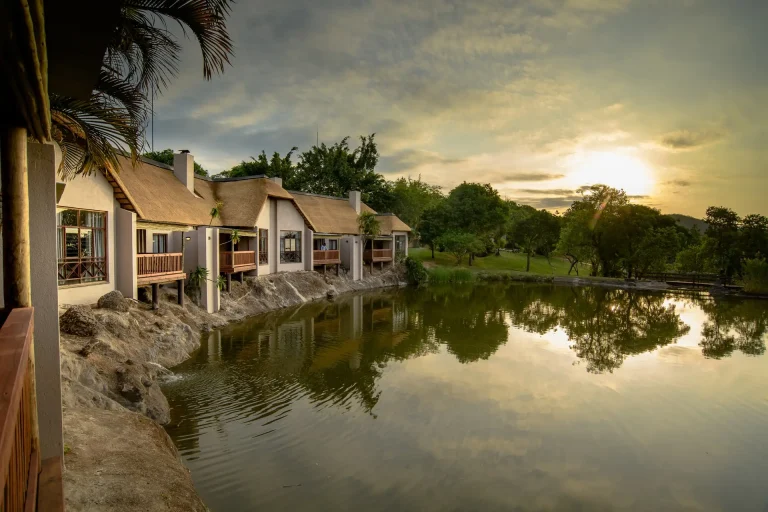
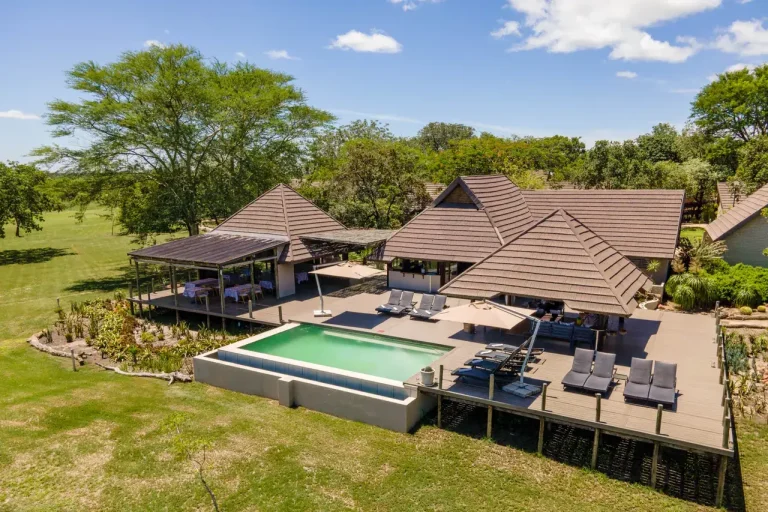
Kruger Safaris, operated by Kurt Safari, offers a halfway house. On our Kruger self-drive safaris you drive yourself to Umbhaba Eco Lodge, just outside Hazyview and about 15 minutes from Numbi and Phabeni gates. Your days in the park are then spent on a guided, full-day open-vehicle safari, shared with other guests, up to 10 per vehicle.
- The 3-day Umbhaba self-drive safari: two nights in a superior room, one guided full day in the Kruger, two dinners and two breakfasts, and one day’s conservation fees. From R5 840 per person sharing.
- The 4-day Umbhaba self-drive safari: three nights, two guided full days, three dinners and three breakfasts, and two days’ conservation fees. From R8 890 per person sharing.
On safari days you leave before sunrise, enter the park as the gates open and stop for a packed breakfast from the lodge after about three hours. Lunch is at a rest camp, at your own cost, and you are back at the lodge around 16:00. Both packages run daily, need at least two people and take children from age 8, with children 11 and under sharing with parents paying 50% less. Check-out on the last morning is at 10:00, and SANParks fees are already covered for the guided days.