
The world famous Kruger National Park covers nearly 2 million hectares, it’s about the size of Wales, and some 147 mammal species and 507 bird species live within it.
The far north is covered in ancient baobabs. The central plains belong to lions and cheetah.
But it is the south that is by far the most spectacular place to travel. This area has the richest wildlife diversity and density, from the first gate to the last river bend.
Pick the wrong region and your days dissolve into empty tar and one distant impala.
Pick the right one and the bush keeps giving you rhino sightings, elephant herds crossing the road right in front of you and perhaps even a very well camouflaged leopard.
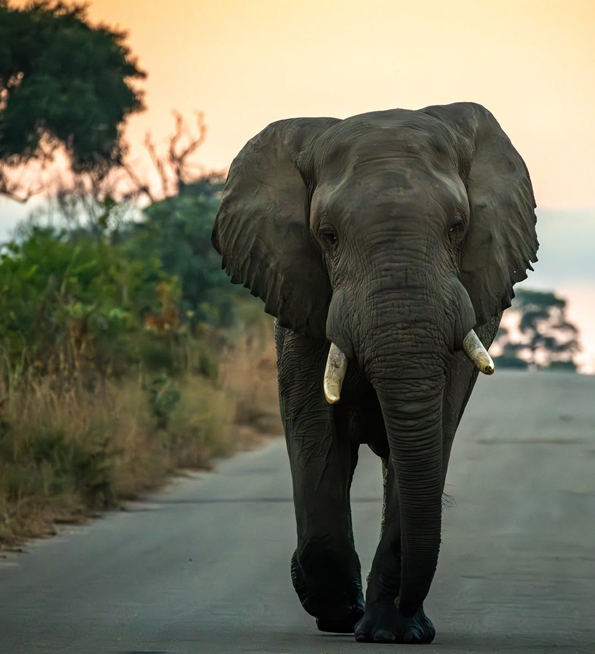
Southern Kruger is the best part of the park to visit, because two permanent rivers, the highest rainfall and sweet basalt grassland gather the densest concentration of mammal species in Kruger, Big Five included. Lower Sabie, Skukuza, Crocodile Bridge and Berg-en-Dal all sit inside this rich pocket, so every drive from camp starts in prime country.
The presence of year round water is the reason.
The Sabie and Crocodile rivers drop low but never completely dry up, and soil in this part of the park holds rain in pans long after storms pass.
Rainfall climbs from about 450 mm in the north to about 750 mm in the south, and the basalt plains grow sweet grass that zebras and buffaloes adore.
And anywhere there’s plains game, predators are never too far behind.
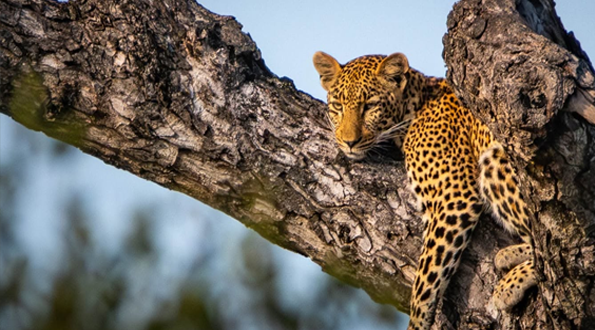
The Kruger National Park’s 3 broad regions will give you 3 very different types of game drives.
The Big 5 roam across all 3 of the areas, but the habitats, water availability, roads and visitor numbers change the experience.
SANParks records 148 mammal species and 546 bird species across the park, so no region guarantees a particular sighting, but some places are better than others for certain sightings.
| Region | Landscape and atmosphere | Strongest draw | Main compromise |
| South | Well-watered river country, mixed woodland and denser roads | Overall variety, leopards, rhinos and Big Five | More vehicles and busier sightings |
| Central | Open grasslands and savanna around Satara | Lions, cheetahs and predator viewing | Less scenic variety than the south; long drives between some areas |
| North | Mopane woodland, baobabs, riverine forests and quieter roads | Solitude, elephants, specialist birds and unusual scenery | More driving and generally less predictable predator viewing |
The southern section, which spans from roughly around Skukuza and Lower Sabie, to Berg-en-Dal and Crocodile Bridge, is usually the best place to visit.
Its rivers and relatively rich grazing support high concentrations of elephant, buffalo, impala, giraffe, rhino and predators.
The Sabie River corridor is an especially wonderful place to visit because the water attracts animals throughout the year. While on a game drive through this area, you should keep a look out for:
The south also has a fantastic road network and several major camps, so you can spend a couple of days in the area and not have to travel the same roads twice.
For this reason alone, the area is more popular, and often busier, than the north.
When you are travelling through this section of the park, you will see plenty of different species in a relatively short space of time, with your chances of sightings improving when you travel at the right time of the year and with a reputable tour operator, like us.
The central of the Kruger is around Satara, Orpen and the N’wanetsi area and it is characterised by its wide-open grassy plains.
Those plains are particularly good for watching predators on the prowl because animals are easier to spot at a distance and herds of zebra, wildebeest and impala attract hunting lions.
Satara in particular, is the park’s prime lion area. One regional source notes that the central region occupies about 30% of the park but supports roughly 40% of its total biomass, including nearly half of its lions; it also records numerous prides around Satara. The roads best for seeing predators include the H6, S100 and S41, although there is never a guarantee that you will come across one.
Cheetahs can also be easier to find in this open country, while hyenas and large herbivore herds add to the predator-focused character.

The northern Kruger sees the least travellers than anywhere else in the park. The area around Shingwedzi, Punda Maria and Pafuri is completely different to what you’ll find when you are further south.
The landscape changes into mopane woodland, rocky country, and baobab-studded hills, with one or two rivers running through it.
Punda Maria and the far north are just the place to visit if you hope to see plenty of birds.
The area’s woodland, fever-tree forest and riverine habitats create a different birding experience from the open central plains. You might also encounter large elephant herds, nyala just barely seen through the thicker vegetation and specialist northern birds.
The north is also associated with remote wilderness and fewer vehicles, although “empty” does not mean wildlife-free.
The downside of travelling north is that the camps are farther apart, game may be more dispersed, and you often need to drive longer distances between areas.
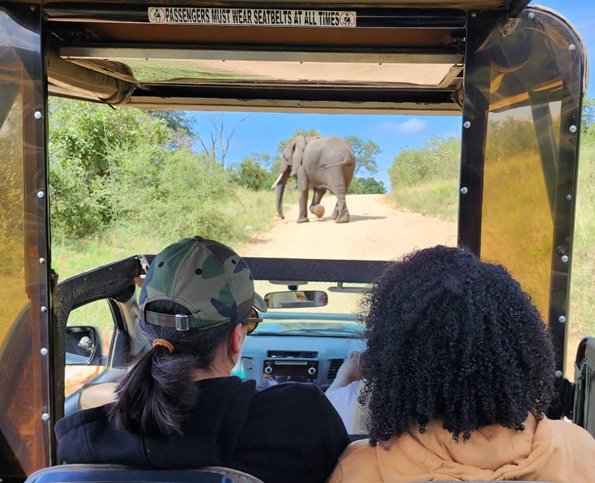
Unless you are driving yourself around, chances are good that you will be touring through the southern Kruger. But there are tour options that cover various other areas of the park, so:
We have a wide selection of Kruger Park safaris available, and each can be booked right here on our website. If you want more control over where you’ll go, you should have a look at our private tours or contact us to arrange a signature safari.