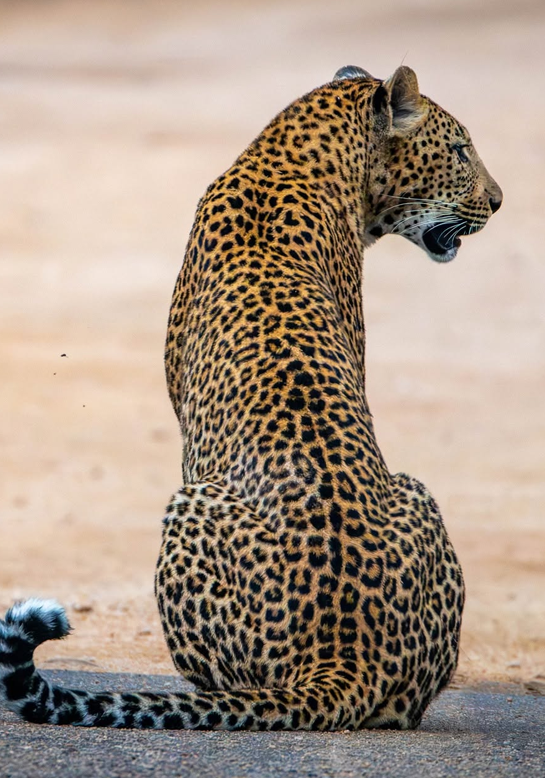
You may drive past a leopard without ever knowing it. Resting high in a marula tree or melting into the shade beside the Sabie River, Kruger’s leopards are masters of staying invisible.
But with the right knowledge, and a little patience, your chances of meeting one improve dramatically.
Leopards favour riverbanks, rocky koppies and dense woodland. The Sabie River corridor between Skukuza and Lower Sabie is one of Kruger’s most productive areas, thanks to its thick cover, prey and large trees.
During the day, look up. Leopards often rest in the forks of marula, sycamore fig and knob thorn trees, where their spotted coats disappear into dappled shade.

Leopards are ambush hunters, most active from dusk to dawn. They stalk close, then explode into a short chase, reaching about 58 km/h and leaping up to 6 metres.
Their menu includes impala, duiker, warthog and even guineafowl. A leopard often drags its kill into a tree, sometimes one as heavy as itself, to keep lions and hyenas away.
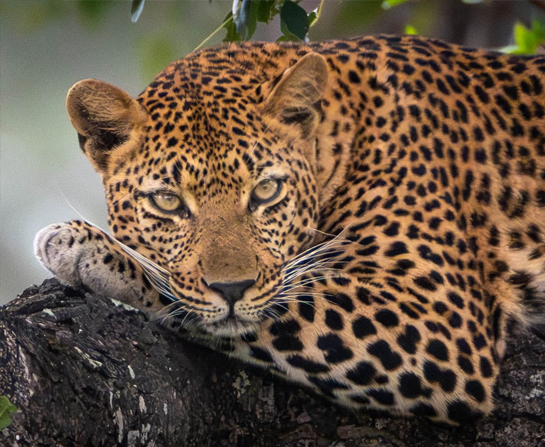
Leopards are solitary, largely nocturnal and exceptionally well camouflaged. A resting cat can look exactly like a branch, shadow or rock.
The IUCN lists leopards as Vulnerable, making every sighting something really special.
After a pregnancy of about 100 days, a mother gives birth to two or three cubs and hides them in rocky dens or thick bush. The cubs remain with her for roughly two years, learning to climb, stalk and hunt before claiming territories of their own.
Aim for dawn and the final hour before sunset, when leopards move, drink and hunt in cooler light.
The dry winter months from May to September improve visibility further, as thinner vegetation and concentrated game make the bush easier to read.
Seeing a leopard is rarely about luck alone.
You need to know where to look, when to look, and what the bush is desperately trying to tell you. You can use these tips to improve your chances of a once in a lifetime sighting:
No safari can guarantee a leopard, but a full-day drive with knowledgeable local guides gives you the best possible chance of meeting Kruger’s most wanted big cat.
Come to Kruger and try your luck with spotting a Leopard. Book your safari with us by visiting Krugersafaris.com.