
Most people who visit the Kruger National Park see the same version of it.
They arrive at the gates at dawn, spend the morning watching animals move through golden light, eat a late lunch at a rest camp, head out again in the afternoon, and then the gates close, and that is that.
It is a wonderful day, and it is also only half the story.
The other half belongs to the dark. And a night drive in the Kruger is how you get access to it.
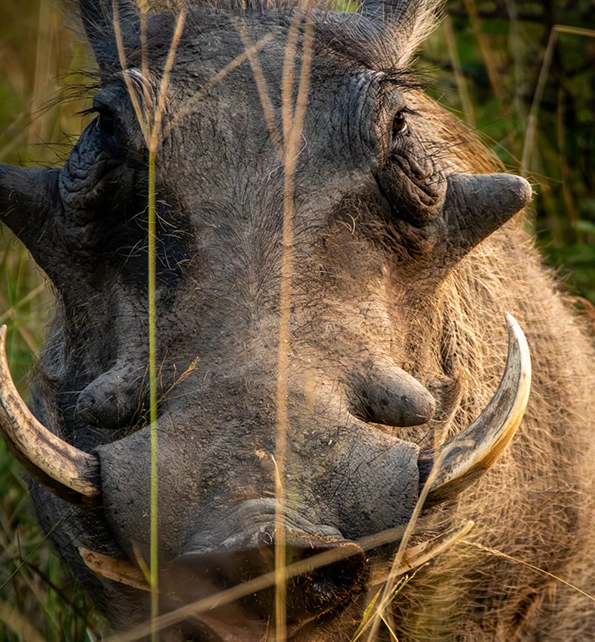
The Kruger National Park is home to over 147 mammal species and more than 500 bird species, according to SANParks.
A number of those species are primarily nocturnal, which means the majority of Kruger visitors never actually see them.
Leopards, for instance, are far more active after dark than during the day. Civets, servals, African wildcats, porcupines, bush babies, aardvarks, and honey badgers all belong to the night shift, too. So do most of the park’s owl species, which number over a dozen.
The atmosphere of the bush changes after dark, too. The heat of the day is gone.
The roads that were busy with other safari and self-drive vehicles are empty. Sounds carry differently in the cool air, and when a guide cuts the engine, and everyone goes quiet, the bush comes alive in a way that daytime simply does not replicate.
A lion’s roar at close range in the dark, something that is rather common just after dusk, is an experience that rearranges something in the chest. It stays with people for a long time.
The Kruger’s standard operating hours run from sunrise to sunset, and self-drive visitors must be off the roads, out of the park or inside a rest camp before the gates close.
Night drives are conducted exclusively by authorised guides in official safari vehicles and are not available to independent self-drive visitors. This is both a safety regulation and a conservation measure.
Guided night drives depart from designated rest camps and use powerful spotlights to scan the roadside for wildlife.
The technique works so well because animals’ eyes reflect light in the dark, giving a trained guide the ability to pick up movement and shapes that would otherwise be completely invisible.
The spotlight sweeps slowly and continuously as the vehicle moves, and a good guide will pick up a pair of glowing eyes at a distance that most passengers would never notice until the vehicle is right alongside the animal.
Vehicles stay on established roads throughout the drive. Off-road driving is not permitted within the main park, including during daylight hours.
Private concessions and game reserves adjacent to the Kruger operate under different rules, and night drives there can include off-road tracking. Both experiences are worthwhile for very different reasons.

Night drives consistently produce animals that daytime guests will not encounter unless they have a real stroke of luck.
Leopards account for a disproportionate number of the most memorable sightings, because these cats move at night with a confidence and unhurriedness that makes watching them feel like a privilege rather than a coincidence.
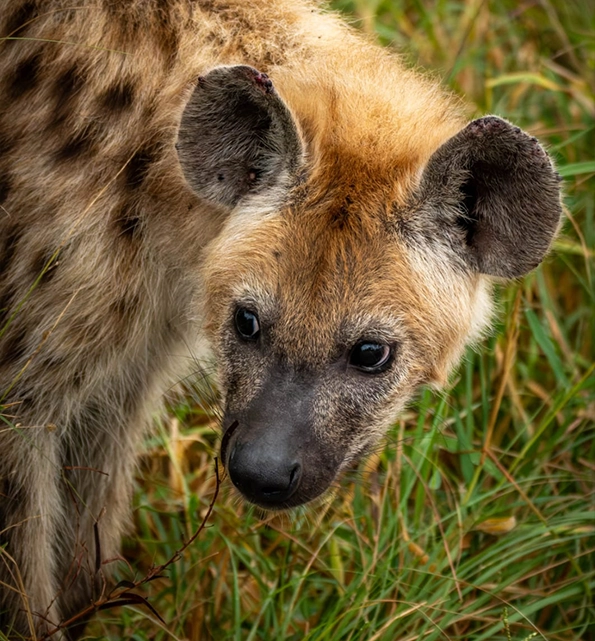
Hyenas are reliably active after dark and are one of the most misunderstood animals in the park. A guide who takes the time to explain spotted hyena behaviour during a night drive tends to convert even the most reluctant admirers.
White-faced scops owls, fiery-necked nightjars, and giant eagle owls are regular sightings.
On a good night, with a skilled guide and some patience, wild dogs, genets, African civets, and even lions can all make an appearance.
Temperatures in the Kruger drop significantly after sunset, particularly in the dry winter months between May and September. Even in summer, the bush cools quickly once the sun is down and the vehicle is moving. Wearing or bringing along a warm layer of clothing is a must. A scarf or beanie for the winter drive is also nice to have.
Photography on a night drive requires some thought, skill and preparation.
A camera that performs well at high ISO settings will serve you far better than one that struggles in low light. Some photographers use a second shorter exposure to capture the spotlight beam and the animal together. It is worth researching basic low-light wildlife photography before the trip if capturing images is important to you.
Night drives are conducted in small groups, which keeps the experience intimate and allows guides to engage meaningfully with guests rather than managing a crowd. Booking in advance is strongly recommended, particularly during peak season from June to August, when availability fills quickly.
For travellers who have already done a Kruger day safari and want to go deeper, a night drive is not a bonus activity. It is a different experience entirely, one that most people who do it say they should have done sooner.